


Sticks were a big part of Halloween this year. Big sticks.
You see, they had to be big because these sticks are pretend monster slaying sticks. And as any kid knows, you can’t slay a monster with some pathetic little twig.
You need a big, hulking, heavy, beast of a stick; preferably sharpened on one end to turn the pretend monsters into a imaginary monster shish kabob.
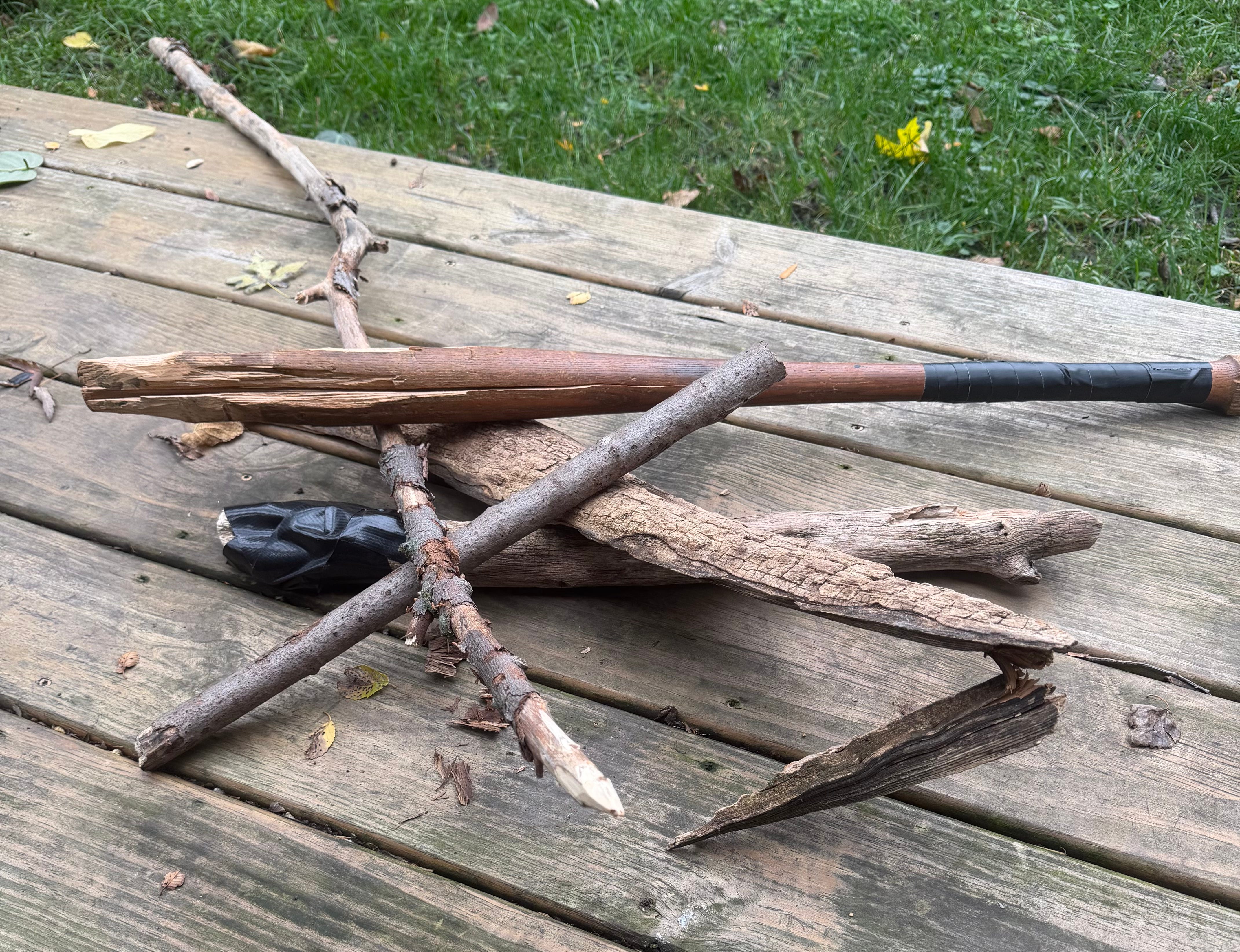
The problem is, a good imaginary monster slaying stick can easily become a very real sibling hurting stick whether the wielder of said stick intends it or not.
And, as you might imagine, this is exactly what happened…
Despite repeated warnings about swinging sticks near other people, one enthusiastic swing eventually connected with a sibling instead of the imaginary monster it was intended for.
Suddenly, the game was over. One kid was crying, another was upset, a third staring in shocked silence, and I was left dealing with a situation I had explicitly warned them about.
And here’s the thing that made it so frustrating.
They knew better.
They knew they weren’t supposed to swing sticks around other people. We’d talked about it. I’d explained why it was dangerous. They understood that someone could get hurt.
And yet, someone got hurt anyway.
I think this is one of the most frustrating experiences we have as parents. It’s one thing when our kids do something wrong because they genuinely don’t know any better. We can explain the rule, help them understand why it exists, and move on.
But when they do something we’ve explicitly told them not to do, particularly when someone ends up getting hurt, it feels very different.
It feels like defiance. Disrespect. A refusal to listen and obey.
And when we interpret behavior that way, our response tends to change. We get louder. We repeat ourselves. We start threatening consequences, usually with increasing intensity, as though the problem is that our children somehow missed the first seventeen explanations.
It took every ounce of my self-control to not start my response to the accident with, “See this is why….”
But I think this response misunderstands something fundamental about how children’s brains work.
We assume that because our children know what they’re supposed to do, they’re capable of doing it.
And those are actually two very different things.
Think about the last time you lost your temper. You probably knew that raising your voice wasn’t going to help. You knew that taking your frustration out on someone else wasn’t going to improve the situation.
And yet, sometimes, you did it anyway.
Not because you didn’t know better, but because knowing better and doing better require different cognitive abilities.
Developmental psychologists call these abilities executive functions. They include the capacity to inhibit impulses, regulate attention, and make choices that serve our longer-term goals.
And here’s the thing I’ve had to learn:
A child can understand a rule, agree with a rule, and still struggle to follow that rule in a tough moment.
And this is precisely why our instinctive response actually makes things worse.
What NOT to do…
When we say, “See! This is why I told you not to swing that stick!” we’re not giving our child any new information. The crying sibling has already made the consequences pretty clear.
What we are doing is shifting their attention away from the person they hurt and toward US. Suddenly, instead of thinking about whether their sibling is okay or how they might make things right, they’re thinking about how angry Dad is, how much trouble they’re in, and what they can do to make the punishment stop.
And the more shame and emotional intensity we pile onto the situation, the harder we make it for our kids to do the very thing we want them to do: slow down, think clearly, and take responsibility for their actions.
We end up demanding more self-control from our children while creating conditions that make self-control even harder.
Worse, we risk teaching our kids that the most important thing about making a mistake is avoiding the consequences, rather than understanding the harm and learning how to repair.
The stick probably still needs to go away. The hurt sibling still needs attention. An apology of some sort is probably in order. None of that changes.
But making our kids feel worse about what happened isn’t the same thing as helping them do better next time.
So what does a response that actually teaches those skills look like?
What to do instead…
In a 2013 review of executive function research, one of my favorite developmental psychologists, Adele Diamond, explained that inhibitory control, our ability to stop ourselves from acting on an impulse, is one of the foundational skills of self-regulation.
And while these skills develop throughout childhood, they’re particularly immature in young children.
So what does this actually mean for how we respond when our children do something they know they’re not supposed to do?
