


Make no mistake, as fun as it is, Parenting on Halloween is parenting on hard mode.
What starts out as a fun quickly becomes another thing for parents to control and manage… and that can bring out the worse in us. But it doesn’t have to!
When our kids are little, we worry about how much candy our kids eat, whether they’ll get too scared, and, as I wrote about last week) the social anxiety around whether they’ll remember to say thank you.
Meanwhile, we’re overlooking something pretty remarkable.
Halloween is one of the few remaining childhood traditions that combines imaginative play, independence, manageable fear, generosity, and community participation into a single evening.
And developmental research suggests, as parents, we should be taking advantage of that.
Last week I wrote: “As a “Parenting Expert” These Are the 5 Things I’d Never Do With My Own Kids on Halloween”
This week, here are seven things research says every parent should make room for this Halloween.
1. Let your child choose their own costume (even if you hate it).
My wife and I have four kids and we spend a lot of time on Instagram so naturally, that means the fantasy of a coordinated family Halloween costume is significantly more appealing than the reality of negotiating one.
But actually there’s a developmental reason to let your child pick their own costume.
Psychologists who study motivation have consistently found that children benefit from opportunities to exercise autonomy. When kids get to make meaningful decisions, they develop a greater sense of ownership over their experiences.
A Halloween costume is a wonderfully low-stakes opportunity to practice that.
Your child wants to be a dinosaur wearing a princess dress? Great. A firefighter with a Spider-Man mask? Fine… Or even a home-made skibidi toilet…
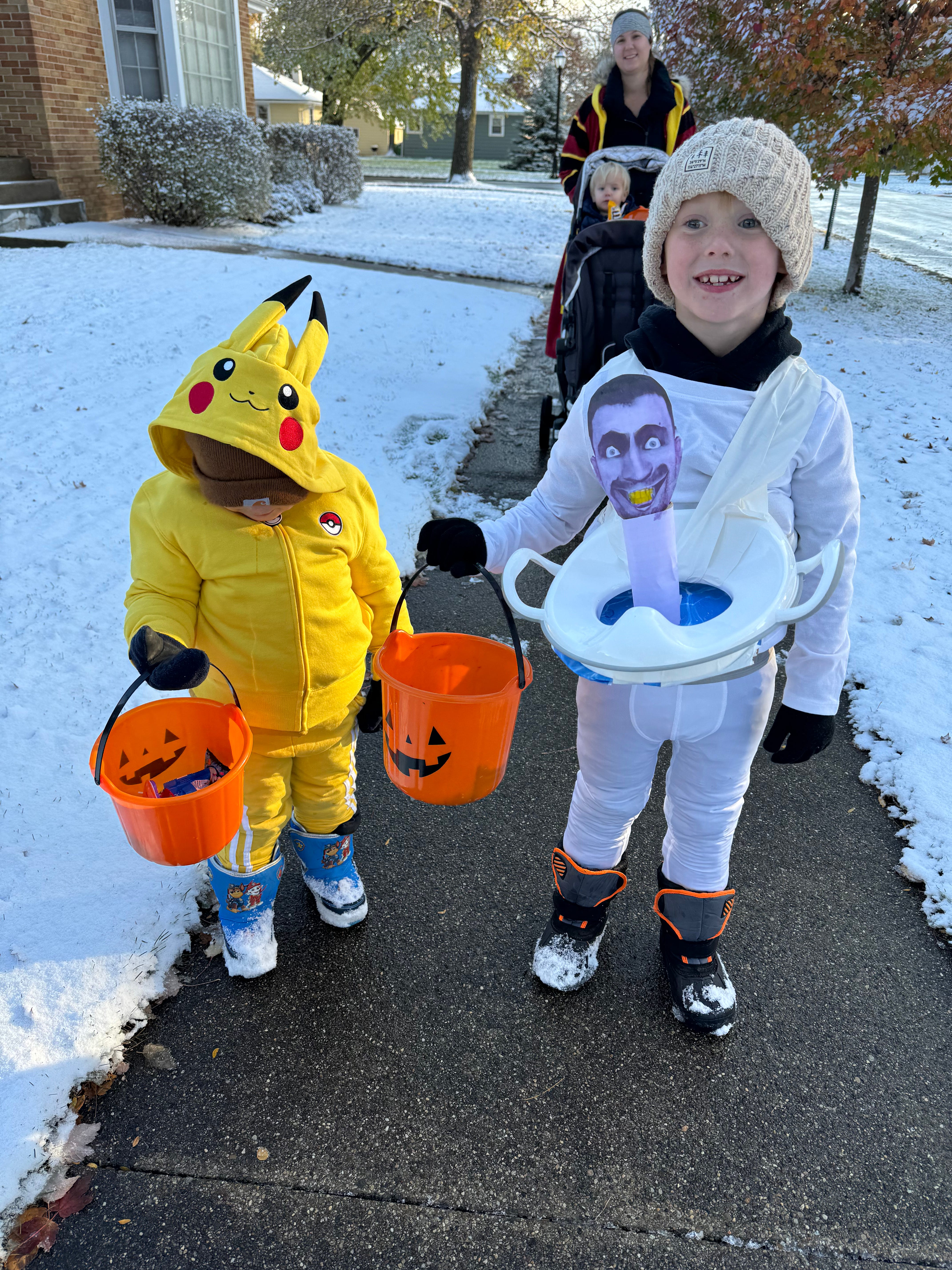
There will be plenty of opportunities in your child’s life when their choices are constrained by expectations, responsibilities, and circumstances beyond their control.
Halloween shouldn’t be one of them.
2. Let them get a little scared.
I don’t mean forcing your terrified four-year-old into a haunted house or making your ten year old watch Paranormal Activity... I mean allowing children to experience fear in circumstances where they have some control over what happens next.
Developmental researchers who study adventurous risky play have identified that manageable encounters with frightening situations help children develop confidence in their ability to cope with fear.
Think about a child approaching a house with a motion-activated skeleton.

They stop. They hesitate. They squeeze your hand.
Your instinct might be to immediately reassure them that there’s nothing to be afraid of, or to steer them toward a less frightening house.
But the best move is to say nothing at all… Just wait.. DO NOTHING.
Let them decide whether to approach. Let them take a step forward and then retreat. Let them scream and then laugh nervously when the spider suddenly JUMPS.
The goal on Halloween isn’t to convince children that nothing is scary. It’s to give them opportunities to discover that they can sometimes feel scared and still choose what to do next.
But most of Halloween’s most interesting developmental opportunities have less to do with the costume and scary decorations and more to do with what happens when your child actually reaches the neighbors front door…
